WOMEN’S ROLES THROUGH TIME: LESSONS FOR TODAY’S INNOVATORS
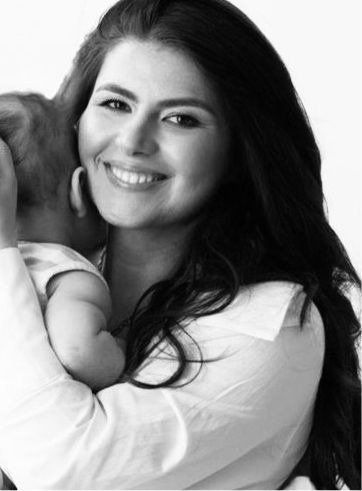
Authors: C Isabela Tatu [Co-Founder & CEO Clean Marine Shipping]
Why this topic? A personal perspective
I grew up during the communist era in Romania, a time when gender equality was presented as a promise already fulfilled. Through the eyes of a child, that promise felt real. Around me, women were teachers, doctors, engineers, technical specialists, even military officers. Leadership and expertise seemed to
belong to everyone — not just men. I grew up feeling equal to my brothers, with the same expectations and opportunities. Competence, not gender, defined success.
But moving to the UK in 2000 changed that perception dramatically. I found a society that still wrestled with gender bias — subtle and systemic. That contrast ignited a deeper curiosity and a commitment that has stayed with me ever since:
- Why do gender disparities persist, even in modern societies?
- What historical transitions caused this power imbalance?
- How did matriarchal societies function before patriarchy took hold?
- And why does poverty still weigh so heavily on women?
In 2022, as a delegate for UN Women UK at the Commission on the Status of Women (CSW), I took part in global conversations about poverty and its systemic effects on women and girls. This made the questions personal. Alongside my brother, an ally and former army commander, we began a deeper research journey to understand how power has shifted throughout human history and how those shifts have shaped gender roles over time.
Our research starts far back in time, around 10,000 BCE and moves gradually through different historical periods, uncovering how societies evolved and how women’s roles changed along the way. This article is part of that journey. It builds on the foundation we set in our four-part blog series Matriarchy to Patriarchy: The Gendered Roots of Power & Poverty.
In this current stage, we focus on how women’s roles evolved across Ancient Egypt, Athens, Sparta, China, Thracian/Dacian societies and the myth of the Amazons.
These historical insights are not just distant facts, they are the lenses through which I reflect on where we’ve been and where we’re heading.
What caused the shift from matriarchy to patriarchy?
This transition wasn’t sudden — it was a gradual shift shaped by power, control and ownership. It unfolded as societies adapted to new environmental, technological and political realities:
Climate change and migration: shifting climates forced communities to move, requiring organized defense and leadership, often male-centered.
Resource centralisation: agricultural expansion and land ownership concentrated power in fewer (mostly male) hands.
Technological advancements: tools, irrigation, and farming practices reinforced male control over production and trade.
Militarisation and warfare: competition for resources tied physical strength to political authority.
Inheritance systems: patriarchal lineage secured property and control over women’s reproductive and social roles.
Religious and cultural codification: myths and laws sanctified male dominance as “natural” or “divinely ordained.”
This was the moment history’s balance tipped — from shared power to controlled power.
From Reverence to Restriction
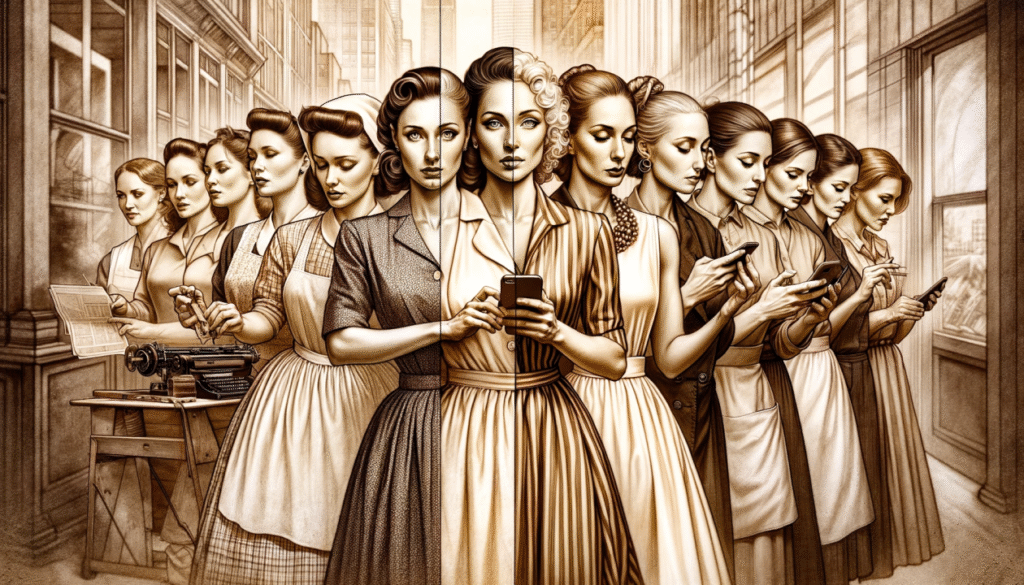
History tells us that women’s roles have never been static. Across centuries and continents, women have moved between visibility and invisibility, power and marginalisation, creativity and constraint.
In many ancient cultures, women held central positions in the home, economy and spiritual life.
- Ancient Egypt granted women rights nearly equal to men: they could own land, run businesses, initiate divorce and even rule as Pharaohs — think Hatshepsut and Cleopatra.
- Classical Athens, by contrast, confined women to the domestic sphere, under the legal guardianship of men.
- Sparta offers another model altogether: Spartan women were educated, physically trained and economically powerful, managing estates while men were at war
Cultural Scripts and Social Innovation
In China, Confucian traditions framed women as keepers of harmony and moral order. But cultural practices such as foot-binding remind us how social norms can both elevate and confine. Among the Thracian and Dacian peoples, women were sometimes treated as property, yet also revered for their loyalty and courage, even joining men in battle. And the Amazons — whether myth or memory — remind us that women as warriors and leaders are not an invention of modern feminism, but part of our shared human story.
Innovation Requires Inclusion
What do these shifts teach us? That women’s contributions have always been essential, whether recorded or erased. Exclusion from decision-making was never inevitable — it was a cultural choice. And what is chosen can also be changed. Today, as we stand at the frontier of technological and ecological transformation, we have the chance to design inclusive systems from the start. Women are leading in climate resilience, AI ethics and clean energy, but barriers persist; underrepresentation in leadership, unequal access to capital and cultural narratives that question women’s authority
From History to Action
Innovation flourishes where diverse voices are heard. The stories of Egypt, Sparta and China remind us that societies thrive when women are empowered politically, economically and socially. The future of innovation depends on learning from the past — dismantling restrictive systems, amplifying the stories that were silenced and building structures where the next Cleopatra, Spartan leader or Amazon warrior doesn’t just inspire… she leads.
Call to Action
As part of the Women in Innovation community, we can:
- Advocate for gender-balanced innovation ecosystems.
- Mentor, fund and support women and girls around the world.History is not just something to admire behind glass. It is a map. And if we read it carefully, it shows us the way forward — toward a world where innovation truly serves everyone.
I would like to end this article on the same personal note where it began. As I mentioned at the start, growing up in communist Romania, gender equality felt like something unquestionable — part of everyday life. Women worked, led, built, taught and shaped communities alongside men. When I left in 2000, I carried that belief with me — that equality was a given. But over these past 25 years, I’ve watched with a heavy heart as things have changed. Romania is now facing many of the same gender inequality challenges I’ve seen elsewhere in the world. And more than that, I’ve noticed something I never experienced growing up: women being increasingly sexualised and objectified in ways that weren’t part of our reality then. What once felt natural and secure has slowly eroded. It’s a painful reminder that equality is never guaranteed. It must be protected, nurtured and fought for — everywhere.
Perhaps what I saw as a child was through the lens of innocence and naivety — but I still remember the feeling of “I can become whoever I want.” And despite everything, I choose to hold on to that belief. What beliefs do you hold on?
References:
- Part I – Breaking the Cycle
- Part II – The Transition
- Part III – Matriarchal Societies
- Part IV – Transition to Patriarchal Societies
👉 Register Here:
https://us02web.zoom.us/webinar/register/WN_eF5nGbDdSy2I7y-G4DB_0A#/registration